
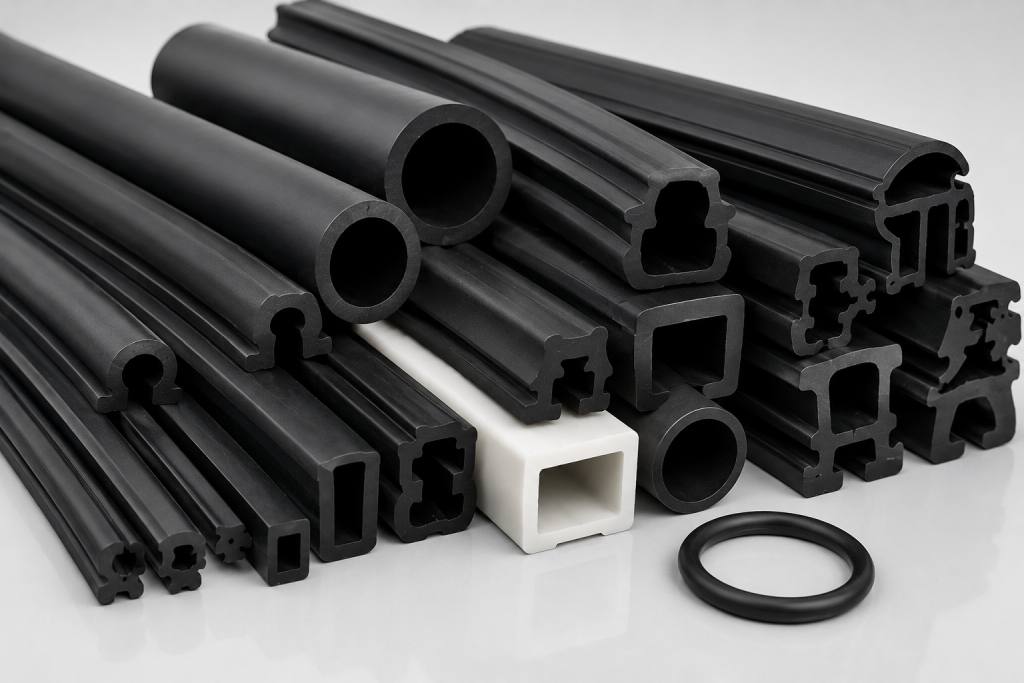
FKM (Viton®) rubber extrusions help semiconductor equipment withstand chemicals, heat, and sealing stress. They are used where standard rubber profiles may fail due to harsh process environments.
Semiconductor manufacturing does not leave much room for material failure. Equipment parts are exposed to chemicals, gases, heat, cleaning agents, and tightly controlled operating conditions. In such environments, even a small sealing issue can affect performance, safety, or process consistency.
This is where FKM (Viton®) rubber extrusions, also known as Viton rubber extrusions, become useful. They are designed for applications where chemical resistance, heat stability, and long-term sealing performance are required.
Built for Chemically Demanding Environments
Semiconductor equipment often operates around aggressive substances. Cleaning chemicals, process fluids, solvents, and gases can damage ordinary rubber materials over time.
FKM rubber is selected because it resists many harsh chemicals better than general-purpose elastomers. This helps reduce swelling, cracking, softening, and premature breakdown of rubber profiles.
For equipment manufacturers and maintenance teams, this means better reliability in areas where chemical exposure is a regular part of operation.
Where FKM Extrusions Fit in Semiconductor Equipment
FKM extruded profiles can be used in multiple parts of semiconductor machinery. Their role is usually simple but critical: seal, protect, separate, or support.
Common applications include:
- Chemical-resistant sealing strips
- Custom rubber gaskets
- Equipment door seals
- Protective edge profiles
- Rubber cords and channels
- Process equipment sealing support
- Profiles for chemical handling areas
- Sealing parts for controlled equipment zones
The exact profile depends on the machine design, chemical exposure, temperature range, and sealing requirement.
Heat Stability That Supports Continuous Performance
Semiconductor equipment can experience elevated temperatures during operation or cleaning cycles. When rubber components are exposed to heat repeatedly, poor-quality materials may harden, lose shape, or stop sealing properly.
FKM rubber extrusions are suitable for such conditions because they maintain performance under heat better than many standard rubber materials. This helps the profile retain its shape, flexibility, and sealing function for longer periods.
In high-value equipment, this stability is important because frequent component failure can lead to downtime and maintenance delays.
Sealing Precision Matters
In semiconductor applications, sealing is not only about closing a gap. It is about maintaining controlled conditions.
A gasket, strip, or profile may be expected to block chemical leakage, prevent contamination, protect sensitive areas, or support vacuum and process stability. FKM rubber extrusions can be manufactured in specific shapes and dimensions to match these requirements.
Their low compression set also helps maintain sealing pressure over time. This is important in static sealing areas where the rubber profile must remain effective even after long periods of compression.
Why Standard Rubber May Not Be Enough
General rubber materials can work well in many industrial applications. But semiconductor equipment often demands more.
The challenge is not only one factor. It is the combination of:
- Chemical exposure
- Heat variation
- Cleaning cycles
- Process sensitivity
- Dimensional accuracy
- Long service expectations
When these conditions come together, material selection becomes more critical. FKM rubber extrusions offer a stronger option for applications where normal rubber may not provide enough resistance or durability.
Custom Profiles for Specific Equipment Needs
Semiconductor machinery is not always built around standard rubber sizes. Many systems require specially designed profiles to fit exact equipment layouts.
FKM rubber can be extruded into different forms, including cords, strips, channels, hollow sections, solid profiles, and special-shaped components. These can be customized based on:
- Profile shape
- Size and thickness
- Hardness
- Application area
- Chemical compatibility
- Temperature requirement
- Sealing pressure
This makes FKM extrusions useful for OEMs, equipment suppliers, and industrial buyers who need rubber parts that match specific performance needs.
Longer Life, Lower Maintenance Pressure
Rubber components may look small compared to the complete equipment, but their failure can create larger problems. A damaged seal or degraded profile can lead to leakage, contamination risk, or unplanned maintenance.
By using FKM rubber extrusions in chemically aggressive areas, equipment owners can improve service life and reduce frequent replacements. This supports smoother operations and better long-term value.
For semiconductor manufacturing, where uptime and consistency are important, durable rubber components can make a meaningful difference.
Key Benefits at a Glance
FKM rubber extrusions are preferred in semiconductor equipment because they offer:
- Strong chemical resistance
- High-temperature performance
- Reliable sealing support
- Good aging and ozone resistance
- Dimensional stability
- Custom profile flexibility
- Longer service life in harsh environments
Each benefit contributes to safer, cleaner, and more dependable equipment performance.
Conclusion
FKM rubber extrusions are a practical choice for semiconductor equipment that must handle chemical exposure, heat, sealing pressure, and controlled operating conditions. Their durability and resistance properties make them suitable for critical areas where standard rubber materials may not perform reliably.
At Shree Rubber Works, we are a leading rubber extrusion manufacturer specializing in customized FKM rubber extrusion profiles for demanding industrial applications. Our extrusions can be developed as per required size, shape, hardness, and performance needs to support semiconductor equipment and other chemical-resistant applications. Contact us today to discuss your custom rubber extrusion requirements.