
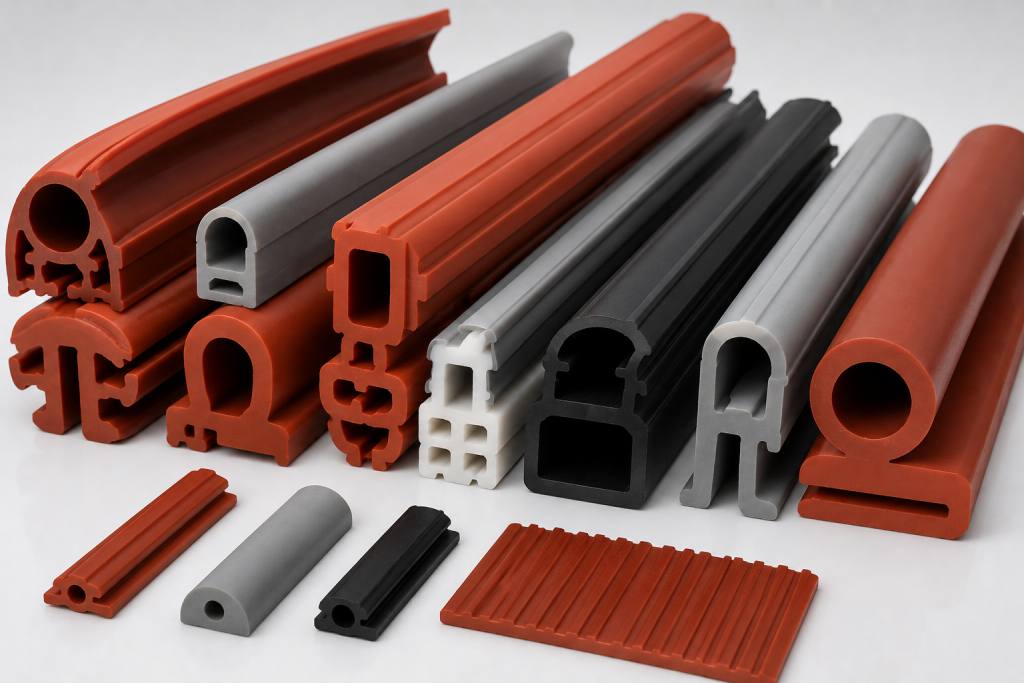
Silicone extrusions support railway safety through heat-resistant, fire-resistant, and durable sealing performance. They are used in coaches, doors, windows, panels, HVAC systems, and electrical equipment where reliability matters.
Railway Safety Depends on the Details
Railway systems operate in some of the most demanding industrial environments. Coaches, locomotives, metro trains, and equipment enclosures are constantly exposed to vibration, heat, dust, moisture, outdoor weather, and long operating hours. In such conditions, even a small rubber profile can play an important role in safety, sealing, and equipment protection.
Silicone extrusions are widely used in railway applications because they offer a strong balance of thermal stability, flexibility, sealing performance, and fire-resistant properties. These profiles can be customized into different shapes and sizes for doors, windows, panels, cable areas, HVAC systems, and equipment compartments.
Why Silicone Works Well in Railway Conditions
A railway rubber profile must do more than simply fill a gap. It may need to prevent dust entry, reduce air leakage, protect cables, seal equipment panels, and support fire-safe design. The material must remain stable while facing movement, compression, and temperature changes over time.
Silicone rubber is suitable for these requirements because it maintains flexibility across temperature variations and performs well in demanding environments. This makes silicone extrusions useful in both passenger-facing areas and technical equipment zones.
Performance Near Heat-Exposed Equipment
Railway systems include several heat-sensitive and heat-generating areas such as electrical cabinets, lighting units, HVAC ducts, cable routing sections, engine compartments, and mechanical equipment spaces. Rubber profiles used in these areas must not harden, crack, or deform easily.
Silicone extrusions help maintain shape and sealing performance in elevated-temperature conditions. Their heat-resistant nature makes them suitable for applications where ordinary rubber profiles may not provide reliable long-term performance.
Fire-Resistant Support for Critical Zones
Fire safety is a major requirement in railway applications, especially in passenger coaches, metro systems, electrical panels, and enclosed equipment sections. Materials selected for such areas must support safer performance and reduce risk in demanding conditions.
Fire-resistant silicone extrusions can be used for sealing, insulation, and protection in railway zones where standard rubber may not be enough. They help support safety-focused equipment design while maintaining the flexibility and sealing performance required for regular operation.
Sealing That Protects Comfort and Equipment
Railway coaches and equipment are exposed to rain, wind, dust, humidity, and constant movement. Poor sealing can affect passenger comfort, equipment durability, and overall performance. Door gaps, window edges, roof sections, lighting units, and panel joints all need dependable sealing support.
Silicone extruded profiles help create a consistent barrier against air, water, and dust leakage. Their flexibility allows them to remain in contact with surfaces even when there is vibration or repeated compression. This makes them suitable for long-term use across both indoor and outdoor railway areas.
Flexibility During Continuous Movement
Trains are never completely still during operation. Continuous vibration, opening and closing of doors, panel movement, and mechanical stress can gradually affect rubber components. A profile that is too rigid may crack or lose its sealing ability earlier.
Silicone extrusions provide good flexibility and recovery. They can support applications where repeated compression, movement, and vibration are part of daily use. This is important for door seals, window profiles, equipment gaskets, and edge protection sections.
Custom Profiles for Railway Design Needs
Every railway application has a different sealing or protection requirement. A door profile, window seal, cable protection section, and electrical panel gasket cannot always use the same rubber design. This is why custom extrusion becomes important.
Silicone extrusions can be developed in different shapes, hardness levels, colours, and sizes depending on the application. Manufacturers and maintenance teams can use custom profiles to match exact grooves, edges, enclosure gaps, and equipment designs.
Common Railway Applications
Silicone extrusions can be used in several railway systems, including:
The final profile selection depends on temperature exposure, fire-safety requirement, vibration level, sealing location, and equipment design. Choosing the right material and profile helps improve durability and reduce replacement concerns over time.
Conclusion
Silicone extrusions are a reliable solution for high-temperature and fire-resistant railway applications. They help support heat resistance, fire safety, sealing performance, flexibility, vibration handling, and long-term durability in demanding railway environments.
At Shree Rubber Works, we manufacture customized rubber extrusion profiles for railway, transportation, and industrial applications. Our profiles can be developed as per required size, shape, hardness, colour, and performance needs to support safe and reliable railway equipment operation. Contact us today to discuss your custom silicone extrusion requirements.