
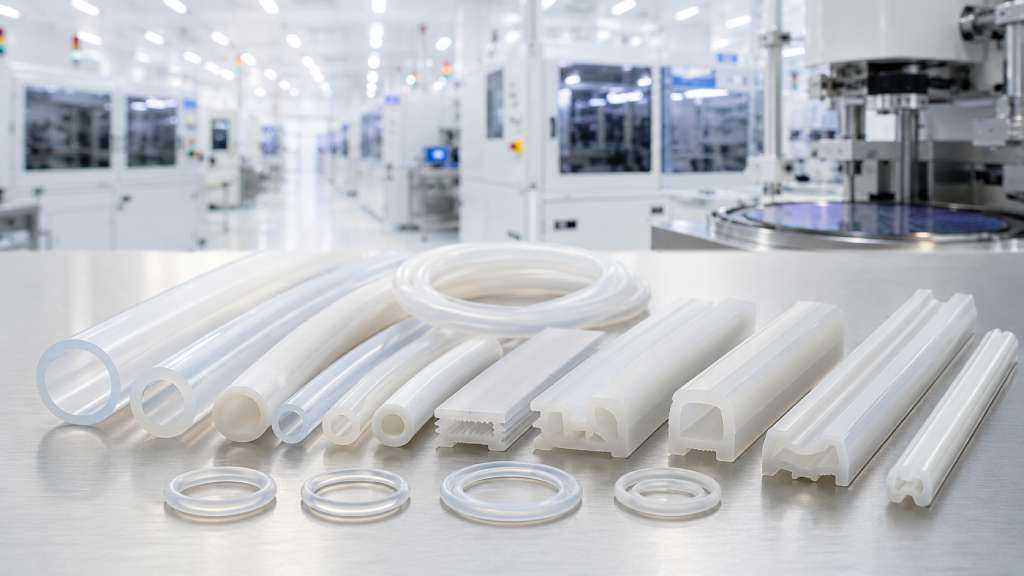
Silicone extrusions support cleanroom and vacuum equipment by providing flexible, low-contamination sealing. They are used in semiconductor manufacturing where cleanliness, temperature stability, and reliable sealing are critical.
Semiconductor manufacturing depends on controlled environments. Even a small leak, particle, or material failure can affect process consistency and equipment performance. Cleanrooms and vacuum systems require components that can maintain sealing integrity while withstanding temperature changes, compression, cleaning cycles, and strict contamination control.
This is where silicone extrusions become useful. These rubber profiles are designed for applications that need clean sealing, flexibility, and stable performance in sensitive equipment environments. In semiconductor manufacturing, silicone extruded profiles can support vacuum chambers, access doors, panels, enclosures, transfer systems, and cleanroom equipment.
Why Cleanroom Sealing Needs Special Attention
A cleanroom is not just a clean space. It is a controlled environment where air quality, particles, moisture, and contamination are carefully managed. Rubber components used in such areas must not easily crack, shed particles, or lose sealing performance over time.
Silicone rubber is widely preferred in controlled environments because it offers flexibility, thermal stability, and good resistance to aging. When extruded into profiles, it can be used to seal gaps, protect edges, and support equipment areas where cleanliness and consistency matter.
Vacuum Environments Need Stable Compression
Vacuum systems depend on reliable sealing. If a seal loses shape or fails under compression, it can affect vacuum performance and create process interruptions. Semiconductor equipment often uses sealing profiles around doors, chambers, access panels, and inspection areas where controlled pressure conditions must be maintained.
Silicone extrusions can be designed to maintain contact with sealing surfaces and support consistent compression. Their flexibility helps them adapt to surface movement while maintaining a secure seal. This makes them suitable for equipment that requires repeated opening, closing, maintenance access, or pressure control.
Built for Heat, Cleaning, and Process Demands
Semiconductor manufacturing equipment may face temperature variations during operation, cleaning, or process cycles. Some rubber materials may harden, deform, or become brittle when exposed to heat over time.
Silicone extrusions offer strong temperature stability, helping the profile retain its shape and flexibility in demanding equipment conditions. This is important in cleanroom and vacuum applications where frequent replacement can increase downtime and contamination risk.
The material also supports applications where cleaning and maintenance are part of regular operations. A durable silicone profile can help maintain performance even when exposed to repeated handling or controlled cleaning practices.
Supporting Clean Equipment Design
Cleanroom and semiconductor equipment is designed with precision. Standard rubber profiles may not always match the exact shape, groove, edge, or sealing requirement. This is why custom silicone extrusion profiles are important.
They can be developed in different shapes, including cords, hollow sections, D-profiles, P-profiles, U-channels, strips, gaskets, and special-section profiles. The final profile can be customized based on equipment design, sealing pressure, hardness, size, and performance requirement.
Common Areas of Use
- Vacuum chamber door seals and access panel profiles
- Cleanroom equipment gaskets, edge seals, protective channels, and custom sealing profiles
These applications require materials that can offer clean performance, flexibility, and reliable sealing over long operating cycles.
Material Consistency Matters
In semiconductor environments, material performance must be predictable. Rubber profiles should maintain their physical properties and fitment over time. Poor-quality extrusions may lead to leakage, early wear, sealing gaps, or contamination concerns.
Silicone extrusions provide a dependable option because they can be manufactured with controlled dimensions and consistent quality. This supports better fitment, easier installation, and reliable performance in sensitive manufacturing environments.
Long-Term Value for Semiconductor Equipment
The cost of rubber components may be small compared to the overall equipment, but their role is important. A failed seal can lead to production delays, maintenance intervention, or process instability.
Using the right silicone extrusion helps reduce these risks. It supports longer service life, better sealing reliability, and smoother equipment operation. For semiconductor manufacturers and equipment suppliers, this means better process support and lower maintenance pressure.
Conclusion
Silicone extrusions are a reliable solution for vacuum and cleanroom environments in semiconductor manufacturing. They help support clean sealing, temperature stability, compression performance, equipment protection, and long-term durability in sensitive production environments.
At Shree Rubber Works, we manufacture customized rubber extrusion profiles for semiconductor, cleanroom, vacuum, and industrial applications. Our profiles can be developed as per required size, shape, hardness, colour, and performance needs to support reliable equipment sealing and cleanroom performance. Contact us today to discuss your custom silicone extrusion requirements.