
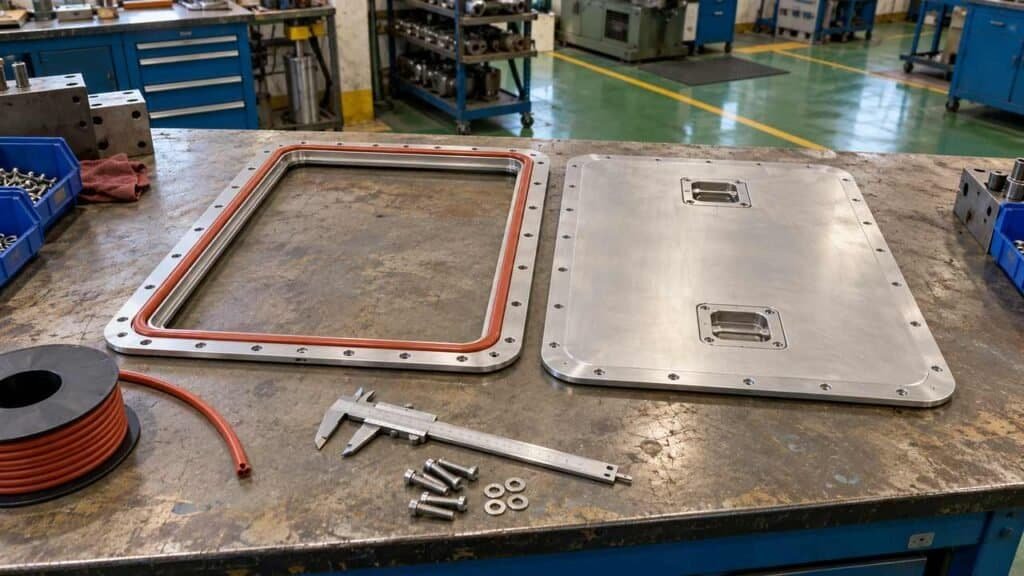
Aerospace components operate in conditions where temperature shifts, vibration, moisture, dust, UV exposure, and pressure changes can affect performance. Sealing systems must protect sensitive areas without making installation or maintenance difficult.
High-temperature silicone extrusions are used in these applications to create flexible environmental seals around panels, doors, enclosures, ducts, access covers, and electrical interfaces. The right profile helps keep contaminants out while maintaining a reliable seal through changing operating conditions.
How do silicone extrusions support environmental sealing in aerospace applications?
Silicone extrusions support environmental sealing by closing gaps between aircraft or aerospace-system components. They can help protect enclosures and interfaces from moisture, dust, airflow leakage, vibration, and temperature changes. Because silicone remains flexible across a broad temperature range, it is often considered for applications where a rigid or standard rubber seal may not maintain the required performance.
For custom shapes, mounting arrangements, and sealing requirements, custom silicone extrusions can be designed around the actual panel, frame, or enclosure interface.
Why environmental sealing is important in aerospace
Environmental sealing is not only about keeping water out. In aerospace systems, an unsealed gap can expose equipment to moisture, dust, salt-laden air, vibration, or changing temperatures. These conditions can affect electrical housings, avionics enclosures, access panels, cable-routing systems, and other non-structural interfaces.
A seal also needs to work with the surrounding design. An access cover may need to be opened during maintenance. A panel may expand or contract with temperature changes. An enclosure may experience vibration during operation. The silicone profile must therefore provide enough compression for sealing without making the component difficult to assemble or remove.
This is why profile geometry matters as much as material selection.
Common aerospace uses of silicone extrusion profiles
Silicone extrusion profiles can be used in several aerospace sealing locations:
- Panel-edge seals for access doors and inspection covers
- Enclosure seals for avionics and electrical systems
- Gaskets around ducts, ventilation interfaces, and equipment housings
- Edge trims that protect sheet-metal or composite-panel edges
- Seals for cable-entry and wire-routing openings
- Door, hatch, and removable-cover perimeters where flexibility is required
A bulb profile may suit a door or cover that closes against a frame. A U-channel profile can grip a panel edge while providing a sealing lip. A sponge silicone profile may be better for uneven surfaces or variable gaps. The right solution depends on the joint design, available space, compression requirement, and maintenance cycle.
High temperature is only one part of the selection process
The phrase “high-temperature silicone” should not be treated as a single, universal specification. Aerospace projects require the actual service conditions to be reviewed before selecting a compound or profile.
Important questions include:
- What is the expected continuous and peak temperature?
- Will the seal face vibration, compression cycling, UV exposure, moisture, or cleaning agents?
- Is the application inside an enclosure, exposed to weather, or part of a high-temperature zone?
- Does the component need specific flame, smoke, outgassing, or aerospace-material compliance?
- What is the required profile geometry and compression range?
A silicone profile may perform well in one environment but need a different compound, hardness, or design in another. For this reason, a drawing, cross-section, gap measurement, substrate material, and operating conditions are useful before a custom profile is finalised.
A practical aerospace example
Consider an avionics enclosure installed behind an access panel. The enclosure contains sensitive electronics, while the panel is removed during inspection and maintenance. If the perimeter gap is not sealed properly, dust, moisture, and airflow can enter the enclosure over time.
A custom silicone bulb profile can be fitted around the panel frame. When the panel closes, the bulb compresses against the mating surface and helps create a continuous environmental seal. The profile must be soft enough to compress consistently, but durable enough to recover after repeated opening and closing.
This example shows why the profile should be selected for the complete interface, not simply for its temperature resistance.
How profile design affects sealing performance
A well-designed extrusion considers the following points:
Compression and recovery
The seal must compress enough to close the gap, then recover after the panel or cover is opened. Insufficient compression can create leakage paths. Excessive compression may damage the profile or make assembly difficult.
Mounting method
The profile may be bonded, clipped onto an edge, retained in a channel, or mechanically fixed. The installation method should suit the component material and the expected maintenance process.
Geometry
A profile should follow the actual shape of the interface. Corners, joints, gaps, fastener locations, and irregular surfaces all affect the final design. A profile that works on a straight panel edge may need a different solution around corners or cut-outs.
Environmental exposure
Aerospace sealing systems can face heat, cold, vibration, weather exposure, and pressure changes. The selected silicone compound should be evaluated against the relevant application conditions instead of relying on a general material claim.
Silicone extrusions and aerospace thermal-management systems
Silicone profiles can also support thermal-management assemblies by sealing interfaces around ventilation paths, equipment housings, and cooling-related enclosures. The purpose is not always thermal insulation. In many cases, the main goal is to control airflow, prevent contamination, or maintain the intended separation between internal and external environments.
For related aerospace thermal-management applications, see silicone components for aerospace thermal management.
Questions to ask before ordering a custom silicone profile
Before requesting a silicone extrusion, provide:
- A drawing or sample of the mating parts
- Gap dimensions and tolerance range
- Required profile length and corner requirements
- Mounting method
- Expected temperature and environmental exposure
- Compression requirement
- Any applicable testing or material-compliance requirement
- Expected maintenance or replacement cycle
This information helps ensure that the extrusion is designed for the actual aerospace interface rather than chosen from a generic profile shape.
Selecting the right silicone extrusion for the application
High-temperature silicone extrusions can be a practical choice for aerospace environmental sealing when the compound, hardness, geometry, and installation method are selected for the real operating environment. The best result comes from understanding the leakage path, joint design, service temperature, and maintenance requirement before finalising the profile.
For custom silicone sealing solutions suited to aerospace applications, contact Shree Rubber Works.