
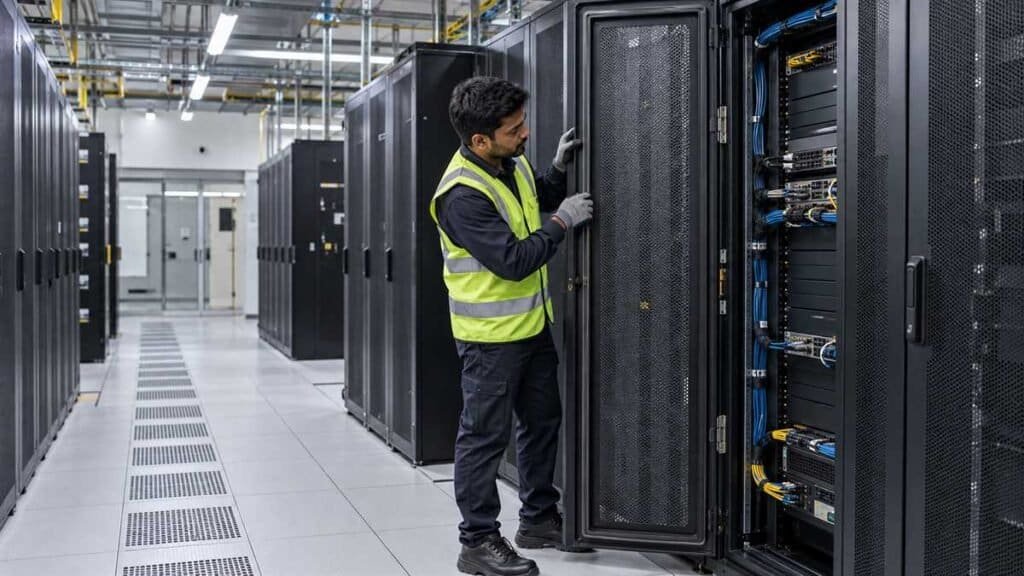
EPDM Extrusions help AI data centers control air leakage and protect critical equipment from dust, moisture, heat, and outdoor exposure.
They support stable cooling paths across racks, panels, cabinets, cable openings, and enclosure systems.
AI data centers are not just larger server rooms. They carry heavier computing loads, tighter rack density, and far greater pressure on cooling infrastructure. With GPU-based systems running continuously, airflow becomes a serious design factor. If cooled air escapes through small gaps or hot air circulates back into the wrong zone, the facility may face higher energy use, uneven temperatures, and added stress on equipment.
This is where EPDM Extrusions play a practical role. These rubber profiles help close gaps, protect enclosure edges, reduce unwanted air movement, and support environmental sealing across data center infrastructure.
Why Small Gaps Matter in High-Density Cooling
Cooling systems are planned carefully in AI data centers. Air handlers, containment panels, rack layouts, and cable pathways are all designed to move air in a controlled direction. But small openings can disturb that flow.
A gap around a rack door, floor panel, access cover, or cable entry point may seem minor. Over time, it can reduce cooling efficiency and create uneven temperature zones. EPDM rubber profiles help limit these losses by forming a flexible seal around areas where air can escape or mix.
The benefit is simple: the cooling system can perform closer to how it was designed.
Environmental Protection Beyond the Server Room
Many AI data centers now include modular units, edge facilities, outdoor electrical cabinets, cooling systems, and supporting infrastructure placed in semi-exposed areas. These spaces may face humidity, dust, rain, sunlight, and temperature changes.
EPDM rubber is well suited for such conditions because it resists weathering, ozone, UV exposure, moisture, and aging. When used as custom extruded profiles, it helps protect sensitive systems without losing flexibility too quickly.
This makes EPDM useful not only inside data halls, but also around outdoor enclosures, control cabinets, cooling units, and infrastructure panels.
Designed for Repeated Access and Compression
Data center equipment is regularly inspected, serviced, opened, and closed. A sealing profile around a cabinet, panel, or access door must recover after compression and continue fitting properly over repeated use.
If the seal flattens, cracks, or shifts out of position, protection reduces. EPDM Extrusions can be designed with the right shape and hardness to support repeated compression while maintaining contact with the sealing surface.
This is especially important around server cabinets, containment doors, power enclosures, and modular units where consistent closure and fitment are required.
Where EPDM Extrusions Are Commonly Used
EPDM Extrusions can support several airflow and sealing needs in AI data centers, including:
- Server rack and cabinet door seals
- Hot aisle and cold aisle containment sealing
- Cable entry and raised floor gap sealing
- Access panel and cover gaskets
- Electrical cabinet and control-panel seals
- Outdoor enclosure and edge data center profiles
Each application has a different requirement. Some areas need soft compression. Others need stronger edge grip, weather protection, or dimensional stability. The extrusion profile must be matched to the actual sealing surface and operating environment.
Custom Profiles for Data Center Infrastructure
Modern AI data centers use a mix of standard racks, high-density cabinets, containment systems, cooling equipment, power modules, and modular infrastructure. A single rubber profile cannot fit every requirement.
EPDM Extrusions can be manufactured as bulb seals, D-seals, U-channels, edge trims, hollow sections, dense profiles, and special custom shapes. The final design can be adjusted based on size, hardness, compression level, installation method, and exposure conditions.
A properly designed profile should install cleanly, compress evenly, and continue sealing through long service cycles.
Long-Term Value for AI Facilities
In high-density environments, small sealing issues can slowly increase operating pressure. Poor air control may lead to cooling loss. Weak enclosure sealing may allow dust or moisture exposure. Damaged profiles may need frequent replacement.
Using suitable EPDM Extrusions helps reduce these risks. They support airflow management, equipment protection, and enclosure reliability while reducing avoidable maintenance concerns.
For AI data centers, where uptime and thermal control are critical, dependable sealing components can make a noticeable difference over time.
FAQ
Why are EPDM Extrusions used in AI data centers?
EPDM Extrusions are used because they help seal gaps, reduce air leakage, protect equipment from dust and moisture, and support stable airflow around racks, cabinets, panels, and enclosures.
How do EPDM Extrusions support airflow management?
They help close unwanted openings around doors, cable entries, access panels, containment systems, and floor gaps. This helps cooling air move through the intended path instead of escaping or mixing with hot air.
Are EPDM Extrusions suitable for outdoor data center enclosures?
Yes. EPDM rubber is suitable for outdoor and semi-outdoor environments because it resists weathering, ozone, UV exposure, moisture, and aging.
Can EPDM Extrusions be customized for different data center designs?
Yes. EPDM Extrusions can be customized into different profiles such as bulb seals, D-seals, U-channels, edge trims, hollow sections, and special shapes based on size, hardness, compression, and installation needs.
Conclusion
EPDM Extrusions are a dependable solution for airflow management and environmental sealing in AI data centers. They help control air leakage, protect sensitive equipment, support cooling efficiency, and improve the long-term reliability of cabinets, panels, enclosures, and modular systems.
At Shree Rubber Works, we manufacture customized EPDM Extrusions for data centers, electrical enclosures, industrial equipment, and infrastructure applications. Our profiles can be developed as per required shape, size, hardness, compression performance, and environmental exposure needs. Contact us today to discuss your custom EPDM extrusion requirements.