
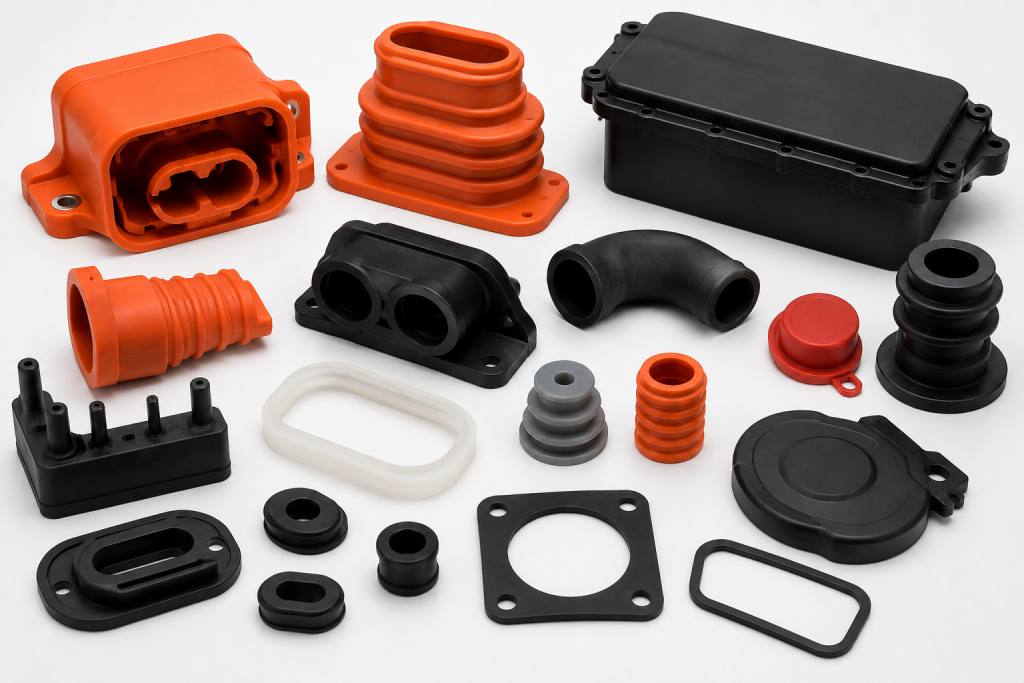
Silicone molded components protect EV battery systems through sealing, insulation, heat resistance, and vibration control. They support safer, longer-lasting performance in battery packs, charging stations, and green energy infrastructure.
Electric mobility is not only about batteries and motors. It also depends on smaller engineered parts that keep systems protected, insulated, and stable during daily operation. In battery systems and EV infrastructure, every seal, gasket, sleeve, pad, or molded cover has a functional role under heat, electrical load, vibration, dust, and moisture.
That is why silicone molded components are used across modern green energy applications. They can be manufactured in precise shapes and sizes to support battery packs, power electronics, charging equipment, and energy storage.
What Makes EV and Battery Applications Demanding
Battery systems work in conditions where multiple risks exist together. There is heat during charging and discharging, electrical sensitivity around terminals and connectors, vibration during movement or installation, and exposure to dust, rain, humidity, and temperature changes.
Standard rubber parts may not always be suitable for these conditions. The material must remain flexible, stable, and protective for a long period. Silicone rubber supports these needs because it performs well across temperature variations and can be molded into application-specific components.
Functional Protection, Not Just Fitment
In EV and green energy systems, silicone molded parts are functional. They seal battery enclosures, insulate electrical areas, cover terminals and connectors, cushion vibration-sensitive sections, protect cable openings, and improve outdoor durability.
Because silicone can be molded into custom forms, manufacturers can create components that match the exact design of the equipment. This helps avoid compromises when standard parts are forced into complex layouts.
Heat Stability Around Power Zones
Battery packs, power control units, and charging systems can generate heat during operation. If nearby rubber parts cannot handle temperature variation, they may harden, crack, deform, or lose their sealing ability.
Silicone molded components are suitable for heat-exposed areas where thermal stability is important. They help protect electrical assemblies, enclosure sections, and sensitive parts from heat-related stress. This makes them useful in battery modules, charger housings, and power electronics.
Electrical Insulation for Safer Systems
EV infrastructure depends on safe electrical management. Terminals, connectors, wires, panels, and control units need protection from accidental contact, leakage risks, and environmental interference.
Silicone rubber has good electrical insulating properties, making it suitable for molded insulation pads, sleeves, caps, covers, and protective barriers. These components help separate sensitive electrical areas and reduce the chances of short circuits.
Sealing Against Dust, Moisture, and Contamination
Battery systems and EV chargers often operate in outdoor or semi-outdoor conditions. Dust, water, humidity, and dirt can enter through small gaps if the enclosure is not sealed correctly.
Silicone molded gaskets, plugs, seals, and covers create a protective barrier around critical openings. They are used in battery boxes, connector zones, charging stations, electrical cabinets, and control panels. A well-designed silicone seal helps improve equipment life and reduces contamination-related issues.
Vibration Control in Moving and Mounted Systems
EV systems and industrial battery equipment may experience vibration during movement, transport, installation, or daily use. Over time, vibration can affect cables, connectors, modules, and mounted parts.
Silicone molded components can be used as vibration-dampening pads, grommets, bushings, and cushioning supports. Their flexibility helps absorb mechanical stress and reduce direct impact on sensitive areas.
Custom Molding for Compact Modern Designs
Battery systems and EV equipment are becoming more compact and design-specific. Silicone molding allows components to be made as per the required shape, thickness, hardness, and performance need.
Common applications include battery pack gaskets, terminal caps, connector covers, insulation pads, cable grommets, protective sleeves, plugs, bushings, charging station seals, and power electronics components.
Conclusion
Silicone molded components play an important role in battery systems and EV infrastructure by supporting insulation, sealing, heat resistance, vibration control, and long-term durability. As electric mobility and green energy systems grow, reliable molded rubber components will remain essential.
At Shree Rubber Works, we manufacture rubber mouldings products for battery systems, EV infrastructure, and industrial green energy applications. Our components can be developed as per required shape, size, hardness, and performance needs to support reliable equipment operation. Contact us today to discuss your custom silicone molding requirements.