
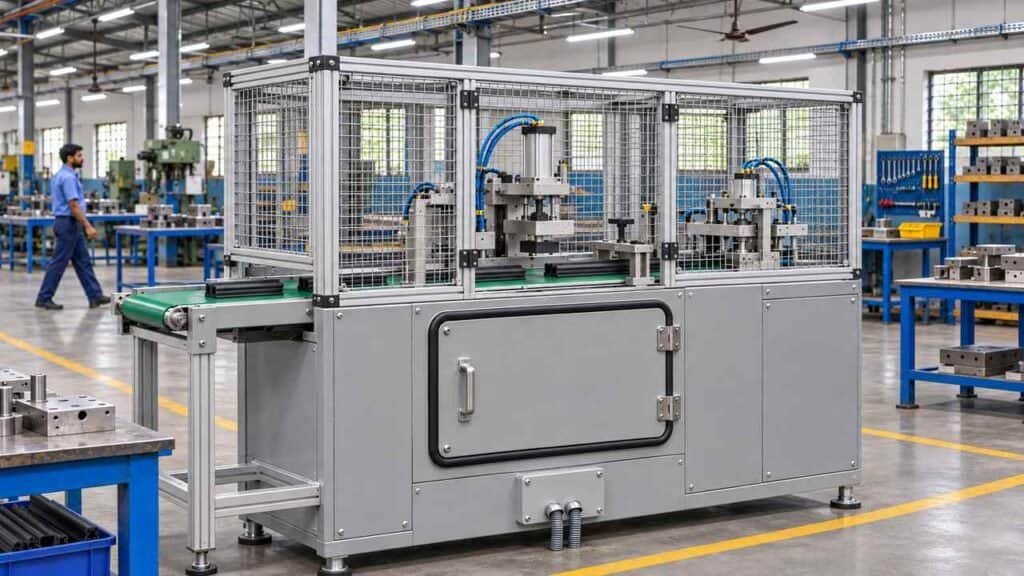
EPDM Extrusions help protect industrial automation equipment by sealing the gaps around control cabinets, sensor housings, machine doors, robotic cells, access panels, and cable enclosures. In a smart manufacturing setup, the seal helps keep dust, moisture, washdown splashes, and outdoor air from reaching the electrical and electronic components that support machine control, monitoring, and data collection.
For machine builders and automation integrators, Rubber Extrusion profiles can be made to suit the exact panel edge, gap size, channel, and compression needed for the equipment.
Why sealing matters in an Industry 4.0 environment
A modern production line can have PLC panels, servo drives, sensors, HMIs, network switches, junction boxes, machine-vision equipment, and cable connections working together. The equipment may be connected, but it still operates in a physical factory environment.
Fine dust can enter through a poorly sealed cabinet door. Moisture can reach a terminal box near a washdown area. Repeated vibration can create small gaps around an access panel. These issues may seem minor at first, but they can lead to corrosion, unstable electrical connections, sensor faults, or extra maintenance work.
Environmental sealing is one part of keeping automated equipment dependable. The objective is simple: protect the enclosure without making the machine difficult to access and service.
Where do sealing gaps appear on automated equipment?
Most gaps are found at interfaces where two hard parts meet. Common examples include:
- Electrical cabinet doors and removable side panels
- Machine guards around robotic or automated work cells
- Inspection doors on packaging, filling, and assembly machines
- Cable-entry panels and junction-box covers
- Control enclosures installed near dust, humidity, or outdoor exposure
- Conveyor covers, access hatches, and service panels
A standard flat gasket is not always suitable for these areas. Some doors require a soft bulb profile that compresses when the latch closes. A metal panel edge may need a U-channel profile that grips the sheet and includes a sealing lip. A large enclosure with slight variation in its gap may need a sponge profile that can accommodate movement without requiring excessive closing force.
A realistic example from an automated production line
Consider a packaging line operating in two or three shifts. Its main control cabinet sits beside conveyors, pneumatic equipment, and frequent material movement. The cabinet door is opened regularly for inspection and troubleshooting.
Over time, a hard or poorly fitted seal can lose contact at the corners. Dust may begin collecting inside the cabinet, especially around cable entries and lower door edges. The machine may continue to run, but maintenance staff now have another source of avoidable checks during every shutdown.
A correctly designed EPDM extrusion around the door frame gives the cabinet a more consistent contact surface. The profile must match the frame dimensions and latch pressure. If it is too hard, the door may be difficult to close. If it is too soft or too small, it may not seal reliably. The profile geometry matters as much as the material.
What should be checked before selecting an EPDM profile?
Automation engineers usually ask a few practical questions before finalising a seal:
Will the panel or door be opened frequently?
A service door needs a profile that can handle repeated compression and release. The seal should recover after opening and should not make the door difficult for technicians to close.
Is the equipment exposed to water, dust, heat, or sunlight?
EPDM is commonly used where resistance to weathering, ozone, moisture, and general outdoor exposure is required. This makes it useful for many enclosure and equipment-sealing applications.
Will the seal come into contact with oil or fuel?
This needs to be checked early. EPDM is generally not the preferred material for continuous exposure to petroleum-based oils, fuels, or greases. In those cases, another rubber compound may be more suitable.
Is the gap consistent around the whole enclosure?
Machine frames and fabricated panels can have small dimensional variations. Sharing the panel drawing, gap measurements, and mounting details with the extrusion supplier helps avoid choosing a profile that looks correct on paper but does not seal well after installation.
Sealing and vibration are often connected
Automated machines experience constant movement from conveyors, motors, actuators, robotic arms, and material handling. Vibration can affect panel fitment and create leakage paths over time.
For applications where vibration isolation is also a concern, read EPDM Sheeting for Vibration Isolation in Automated Manufacturing. Sheeting and extrusion profiles serve different purposes, but both can be part of a better equipment-protection plan.
Frequently asked questions
Can EPDM extrusions be used on control panels and electrical cabinets?
Yes. EPDM extrusion profiles are commonly used around cabinet doors, access covers, panel edges, and enclosure frames to help protect internal electrical components from dust, moisture, and weather exposure.
Can the profile be customised for a machine enclosure?
Yes. The shape, size, hardness, density, and mounting style can be adjusted according to the panel design, gap size, compression requirement, and operating environment.
Are EPDM extrusions suitable for outdoor automation equipment?
They can be a suitable option for outdoor-facing enclosure seals because EPDM has good weathering and ozone resistance. The final profile and compound should still be matched to the actual application.
How can I provide the right details for a custom extrusion?
Environmental sealing helps automation equipment stay protected from dust, moisture, and day-to-day industrial exposure. To explore custom rubber products for industrial applications, visit Shree Rubber Works.
Before finalising an EPDM profile, check the panel gap, mounting method, operating conditions, and expected service access. Sharing these details early makes it easier to select a suitable profile for the equipment. For help with a specific requirement, contact our team.