
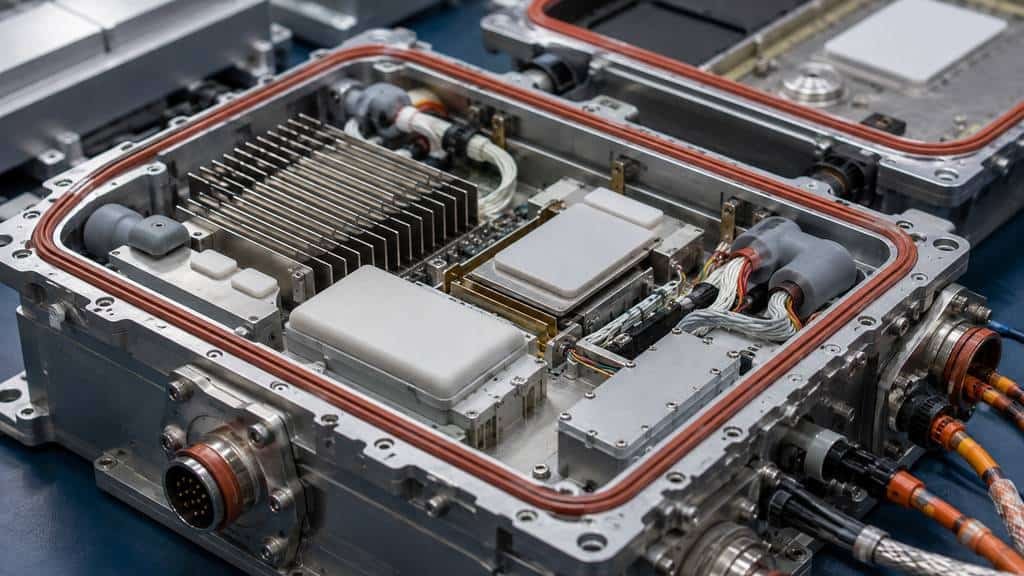
Silicone Moulding supports aerospace thermal management by creating flexible, heat-resistant, and precisely shaped components.
These molded parts help protect sensitive systems from heat, vibration, insulation challenges, and demanding operating conditions.
Aerospace systems operate in environments where temperature control is critical. Components may be exposed to heat from engines, electrical systems, batteries, avionics, lighting units, and power modules. At the same time, they must handle vibration, pressure changes, weight limitations, and strict performance expectations.
In such applications, material selection becomes extremely important. Silicone Moulding offers a reliable way to create custom rubber components that can support thermal protection, insulation, sealing, and cushioning in aerospace equipment. Because silicone can be molded into accurate shapes, it is suitable for parts that need to fit specific spaces and perform consistently under changing conditions.
Thermal Management Needs More Than One Solution
Heat control in aerospace systems is not handled by one component alone. It depends on a combination of design, airflow, insulation, shielding, sealing, and material performance. A small molded silicone part may help separate heat-sensitive areas, protect electrical assemblies, reduce vibration around a module, or seal a housing where temperature variation is expected.
This makes silicone molded components useful in areas where both flexibility and temperature resistance are required. They can support system performance without adding unnecessary complexity to the design.
Why Silicone Works Well in Heat-Exposed Areas
Silicone rubber is known for its ability to remain flexible across a wide temperature range. This makes it suitable for aerospace environments where components may face repeated heating and cooling cycles. Some rubber materials may harden, crack, or lose shape when exposed to heat for long periods, but silicone can maintain its functional properties more effectively.
Through Silicone Moulding, the material can be converted into pads, seals, gaskets, sleeves, bushings, covers, and custom-shaped components. These parts can help reduce heat transfer, protect surfaces, support insulation, and maintain sealing performance near temperature-sensitive equipment.
Protecting Sensitive Aerospace Electronics
Modern aerospace systems depend heavily on electronics. Avionics, control systems, sensors, communication units, power electronics, and battery systems all require protection from heat, vibration, and environmental exposure.
Silicone molded components can be used around these systems to provide sealing, insulation, and cushioning. A molded gasket can help protect an enclosure. A custom pad can support thermal separation. A sleeve or cover can protect wiring or connectors. In each case, the molded part supports reliability by protecting sensitive components from stress.
Precision Fit for Compact System Designs
Aerospace equipment often has limited space. Components must be lightweight, compact, and designed with accuracy. Standard rubber parts may not always match the shape, thickness, or performance requirement of the system.
Silicone Moulding allows parts to be made according to exact application needs. The component can be customized based on profile shape, size, hardness, flexibility, colour, and performance requirement. This is useful when the molded part must fit into a specific enclosure, channel, mounting area, or equipment assembly.
Performance Areas in Aerospace Applications
Silicone molded components can support aerospace systems in several ways:
- Thermal insulation and heat-resistant protection
- Sealing around electronic and mechanical housings
- Vibration cushioning near sensitive components
- Connector, cable, and wiring protection
- Custom pads, gaskets, sleeves, caps, and covers
These applications may vary depending on the system design, operating temperature, vibration level, and exposure conditions.
Supporting Long-Term Reliability
Aerospace components are expected to perform consistently over long service periods. Frequent replacement is not always practical, especially when parts are used inside complex assemblies or hard-to-access equipment.
Silicone molded components help support long-term reliability by resisting aging, maintaining flexibility, and performing under temperature variation. When the design and material grade are matched correctly, these parts can reduce the risk of sealing failure, insulation breakdown, or vibration-related wear.
Conclusion
Silicone molded components play an important role in thermal management for aerospace systems. They help support heat resistance, insulation, sealing, vibration control, and protection for sensitive equipment operating in demanding conditions.
At Shree Rubber Works, we manufacture customized components through Silicone Moulding for aerospace, industrial, electrical, and specialized equipment applications. Our molded silicone parts can be developed as per required shape, size, hardness, colour, and performance needs to support reliable thermal management and equipment protection. Contact us today to discuss your custom silicone molding requirements.