
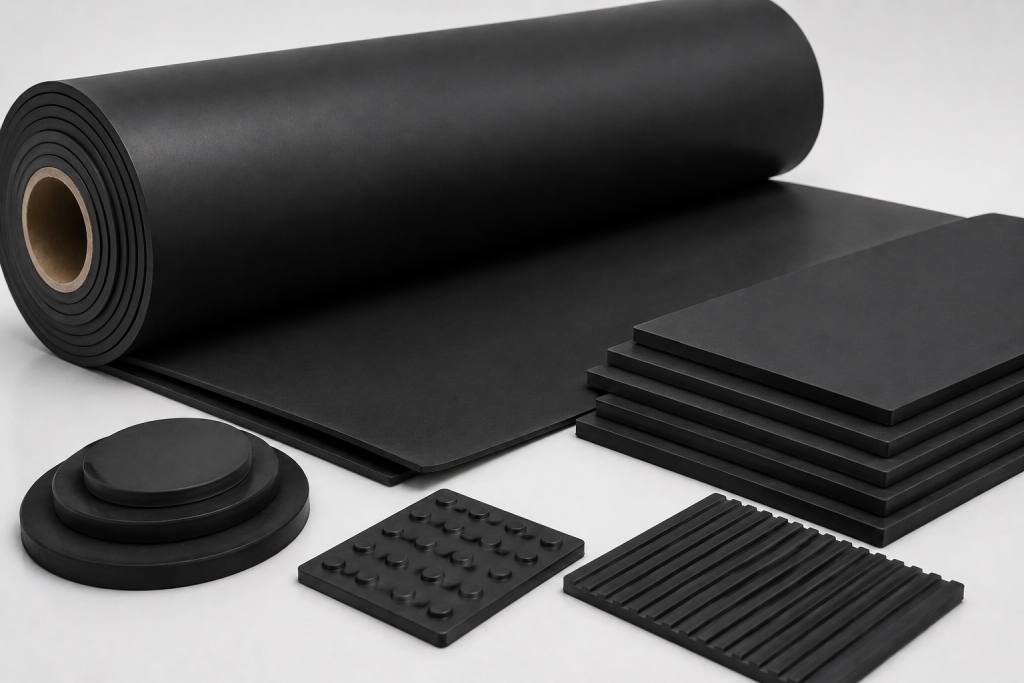
EPDM sheeting helps reduce vibration transfer in automated manufacturing systems. It supports machine stability, noise control, equipment protection, and longer service life.
In automated manufacturing, precision is everything. Robotic arms, conveyors, assembly lines, sorting systems, packaging units, and CNC-linked processes work at speed and repeat continuously. But with constant motion comes vibration. If not controlled properly, this vibration can affect machine accuracy, increase noise, damage components, and create unnecessary maintenance issues.
EPDM sheeting provides a practical rubber-based solution for vibration isolation in automation and robotics environments. It can be used as pads, liners, strips, gaskets, base layers, and protective sheets to absorb movement and reduce the transfer of vibration between equipment and surrounding surfaces.
The Problem: Vibration Travels Faster Than You Think
In a manufacturing setup, vibration does not stay limited to one machine. It can move through floors, machine frames, support structures, panels, and nearby equipment.
This can lead to:
- Unstable machine positioning
- Higher operational noise
- Loosening of fittings and fasteners
- Wear on sensitive parts
- Reduced comfort in work areas
- Frequent maintenance interruptions
For automated systems that depend on repeat accuracy, even small vibration-related disturbances can affect performance over time.
The Material Response: Why EPDM Works
EPDM rubber is valued in industrial applications because it offers flexibility, cushioning, durability, and resistance to environmental stress. When used in sheet form, it becomes easy to cut, place, fabricate, or customize as per machine layout.
Its ability to absorb impact and reduce direct surface contact makes it suitable for vibration isolation. EPDM sheeting acts as a buffer between hard surfaces, helping control the effect of repeated machine movement.
Application Area 1: Machine Base Isolation
Automated equipment often rests on metal frames, platforms, or factory flooring. Without a protective rubber layer, machine vibration can travel directly into the floor and surrounding structure.
EPDM sheets can be used below machine bases or mounting areas to create a cushioning layer. This helps improve stability, reduce vibration transfer, and protect the equipment from continuous mechanical stress.
Application Area 2: Robotics and Moving Assemblies
Robotic systems work through repeated movement, rotation, gripping, lifting, and placing. These movements may create impact at contact points, especially in high-speed production areas.
EPDM sheeting can be used around workstations, robotic cells, support sections, and contact zones to reduce impact. It helps protect both the machine and the surrounding surfaces from wear caused by repeated operation.
Application Area 3: Conveyor and Transfer Lines
Conveyors and transfer systems are essential in automated manufacturing. Motors, rollers, belts, and moving loads can generate vibration during continuous operation.
EPDM rubber sheets can be used as support pads, liners, or anti-vibration strips in conveyor systems. This helps control vibration, protect structural parts, and support smoother movement across production lines.
Application Area 4: Noise Reduction in Production Areas
Noise in automated plants often comes from vibration, surface contact, moving parts, and impact. While EPDM sheeting may not remove noise completely, it can help reduce sound caused by vibration transfer and hard surface contact.
When used in the right areas, EPDM sheets contribute to a more controlled and comfortable manufacturing environment.
Application Area 5: Protection for Panels, Enclosures, and Frames
Automation systems include control panels, electrical enclosures, machine guards, and metal frames. These parts can experience vibration from nearby equipment.
EPDM sheeting can be used as a lining or sealing support to reduce rattling, protect surfaces, and provide cushioning. This is especially useful where metal-to-metal contact needs to be avoided.
Customization Makes It More Useful
Every automated manufacturing setup is different. The required sheet thickness, hardness, size, and shape may change depending on machine weight, vibration level, operating environment, and available space.
EPDM sheeting can be customized into:
- Anti-vibration pads
- Rubber strips
- Protective liners
- Machine base sheets
- Frame cushioning layers
- Gaskets and sealing sheets
- Custom-cut rubber components
This flexibility makes it suitable for both new equipment design and maintenance replacement needs.
Long-Term Value in Industrial Environments
EPDM rubber offers good resistance to aging, ozone, weathering, and general industrial conditions. This helps the sheet maintain performance for longer periods, even in demanding manufacturing environments.
For automation systems, this means fewer replacements, better equipment protection, and reduced maintenance pressure.
Conclusion
EPDM sheeting is a reliable material for vibration isolation in automated manufacturing. It helps reduce vibration transfer, control noise, protect machine parts, improve stability, and support long-term equipment performance.
At Shree Rubber Works, as a trusted rubber sheet manufacturer, we produce high-quality EPDM rubber sheeting for industrial, automation, and robotics applications. Our sheets can be supplied in required thickness, hardness, size, and specifications to suit vibration isolation and equipment protection needs. Contact us today to discuss your EPDM sheeting requirements.