
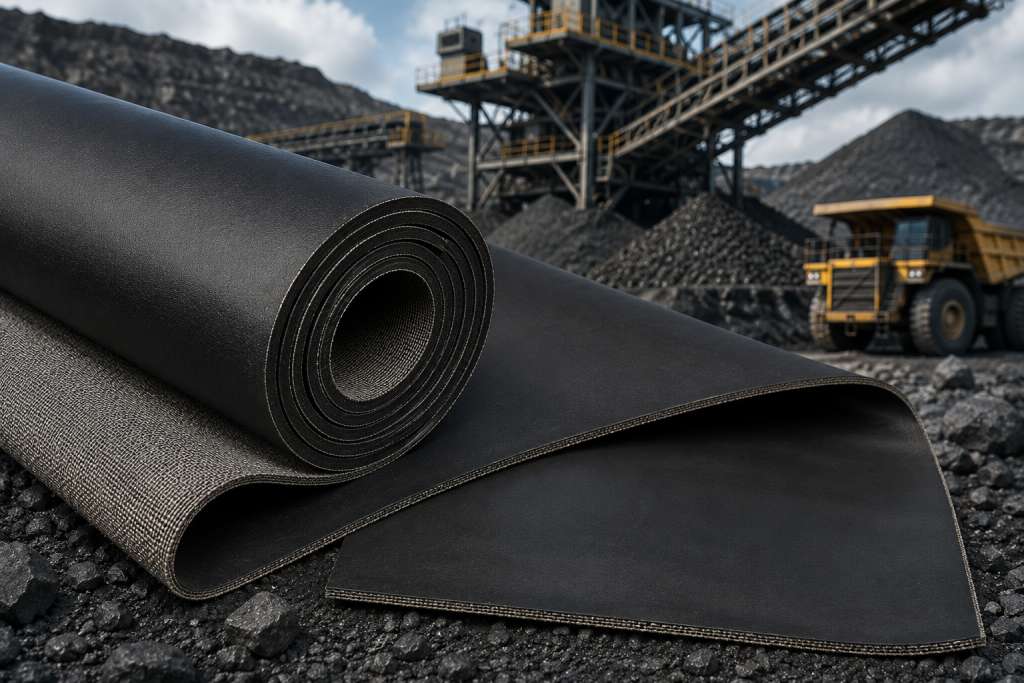
Calendered coated fabrics are built for mining zones exposed to friction, impact, and constant material movement. They combine reinforced textile strength with rubber protection to support longer service life in high-wear areas.
Mining systems work under conditions that can quickly damage ordinary protective materials. Ore, coal, minerals, and aggregates move through conveyors, chutes, loading points, and transfer sections with continuous force. The result is repeated abrasion, surface wear, dust leakage, and impact-related damage.
Calendered rubber-coated fabrics offer a practical solution for these demanding areas. The material is created by bonding rubber to a reinforced fabric layer through a controlled calendering process. This produces a flexible composite that can handle movement while offering stronger resistance to wear.
Why Mining Operations Need Reinforced Coated Fabrics
A mining plant does not only need materials that are strong. It needs materials that can remain dependable while equipment vibrates, loads shift, and bulk material keeps moving.
The fabric reinforcement provides tear strength and structural support. The rubber coating creates a protective outer layer that helps resist abrasion, moisture, dust, and repeated surface contact.
Together, these properties make coated fabrics suitable for areas where rigid linings may not fit properly and ordinary fabrics may wear out too quickly.
What the Material Is Expected to Handle
In high-contact mining zones, calendered coated fabrics may need to manage several challenges at the same time:
- Continuous abrasion from mineral, ore, coal, or aggregate flow
- Repeated impact at conveyor transfer points and chute sections
- Vibration, flexing, and movement around operating equipment
- Dust, moisture, and general outdoor exposure
- Contact with metal edges, rollers, structures, and moving surfaces
The final material design should match the actual operating environment. Factors such as thickness, rubber compound, fabric type, and reinforcement strength all affect performance.
Where These Coated Fabrics Are Used
Calendered rubber-coated fabrics can be integrated into several mining and material-handling applications, including:
- Conveyor skirting and transfer-point curtains
- Flexible chute liners and impact barriers
- Dust-control curtains and containment systems
- Protective flaps around bulk material handling equipment
- Flexible wear shields near discharge and loading zones
- Custom fabric-reinforced rubber sections for mining plants
These applications help reduce direct wear on equipment surfaces while supporting better material control.
A Flexible Alternative to Rigid Protection
In mining operations, movement is unavoidable. Conveyors vibrate, material loading changes, and transfer points face constant operational stress. A rigid protective component may crack or create gaps if it cannot adapt to this movement.
Calendered coated fabrics offer a useful balance. They are flexible enough to follow equipment contours and move with the system, while the reinforced fabric layer helps maintain strength. The rubber coating also supports cushioning and wear protection in areas exposed to repeated contact.
This makes them especially useful where a close fit is needed around conveyors, chutes, enclosures, and high-abrasion zones.
The Importance of Calendered Construction
Calendering helps create a more consistent rubber-fabric composite. The process supports better bonding between the textile base and rubber layer while helping maintain controlled thickness across the material.
For mining applications, this consistency matters. Uneven coating, weak bonding, or poor reinforcement can lead to early wear, tearing, or separation under stress. A properly calendered coated fabric is better positioned to deliver reliable performance over longer operating cycles.
Choosing the Right Material for the Job
Not all mining environments create the same kind of wear. Fine powder handling, coarse aggregate transfer, ore movement, and coal processing can each place different demands on a protective material.
The selection should consider the following:
- Type and size of material being handled
- Abrasion and impact intensity
- Moisture or outdoor exposure
- Expected movement and flexibility requirements
- Equipment design and installation area
- Required thickness and reinforcement level
A material that is matched to these conditions can help reduce maintenance interruptions and improve the working life of flexible protective components.
Conclusion
Calendered rubber-coated fabrics are a reliable choice for mining applications that require abrasion resistance, flexibility, and reinforced protection. They support better performance at transfer points, conveyors, chutes, and other areas exposed to continuous wear.
At Shree Rubber Works, we manufacture customized rubber products for mining, material handling, and industrial protection applications. Our calendered rubber-coated fabrics can be developed as per required rubber compound, fabric reinforcement, thickness, finish, and performance needs. Contact us today to discuss your abrasion-resistant coated fabric requirements.