
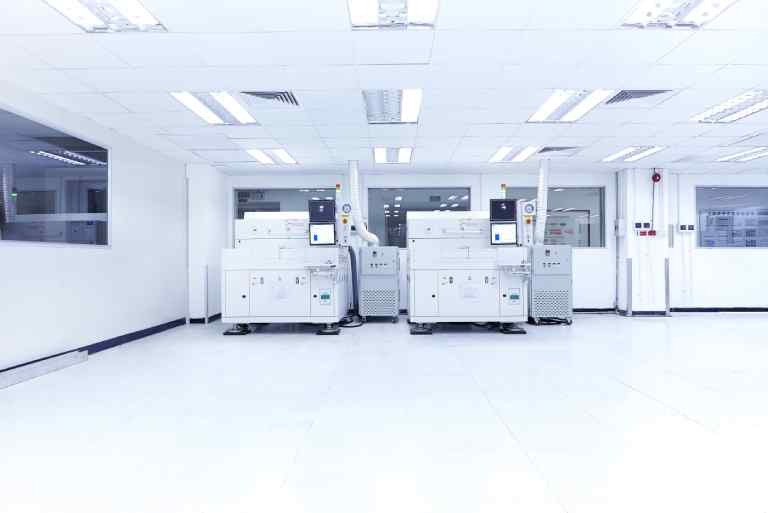
The semiconductor industry operates in an environment where precision is not just preferred, it is mandatory. From wafer fabrication to advanced packaging, every stage demands ultra-clean conditions to protect delicate components from contamination. One often-overlooked but critical element in maintaining these controlled environments is the sealing system used in semiconductor tool enclosures. This is where cleanroom-grade rubber components play a vital role, ensuring airtight sealing, vibration control, and long-term reliability.
In semiconductor manufacturing facilities, rubber extrusions are widely used in tool enclosures, access panels, doors, and modular frames. These components must perform flawlessly in cleanroom conditions, where even microscopic particles or chemical outgassing can compromise yield. Unlike conventional rubber profiles, cleanroom-compatible extrusions are engineered to meet strict cleanliness, material stability, and performance standards demanded by the semiconductor sector.
Why Cleanroom Compatibility Matters
Cleanrooms used in semiconductor fabs typically adhere to ISO Class 1 to Class 5 standards. At these levels, airborne particle limits are extremely low, and materials used inside the environment must not shed particles, absorb chemicals, or degrade under controlled temperature and humidity conditions. Rubber extrusions used for tool enclosures must therefore be manufactured using carefully selected compounds and tightly controlled processes.
Low particle generation is a key requirement. Poorly formulated rubber or rough surface finishes can release particles over time due to friction, compression, or aging. Cleanroom rubber extrusions are designed with smooth surfaces and stable elastomer formulations to minimize this risk. Additionally, these profiles must exhibit low outgassing to prevent volatile compounds from interfering with sensitive semiconductor processes.
Material Selection for Semiconductor Tool Enclosures
Material choice is critical when designing rubber extrusions for cleanroom tool enclosures. Commonly used elastomers include EPDM, silicone, fluorosilicone, and FKM, depending on the operating environment and exposure conditions. Silicone rubber is often preferred for its excellent temperature resistance, flexibility, and low outgassing properties. EPDM is used where resistance to chemicals, ozone, and aging is required.
Each compound must be carefully formulated to balance mechanical strength, compression set resistance, and chemical stability. For semiconductor tools that operate continuously, rubber extrusions must maintain their sealing performance over long periods without hardening, cracking, or deforming.
Precision Extrusion and Tight Tolerances
Semiconductor equipment manufacturers demand extremely tight tolerances, even for sealing components. Rubber extrusions used in tool enclosures must fit perfectly within aluminium or stainless-steel frames to prevent air leakage and vibration transmission. Any dimensional inconsistency can compromise enclosure integrity and impact cleanroom performance.
Advanced extrusion tooling, precise die design, and consistent process control are essential to achieving these tolerances. Post-extrusion operations such as curing, cutting, splicing, and joint bonding must also be performed under controlled conditions to ensure dimensional accuracy and cleanliness.
Performance Under Harsh Conditions
Despite the controlled environment of a cleanroom, semiconductor tools can expose rubber components to challenging conditions. These include temperature fluctuations, vacuum environments, chemical cleaning agents, and continuous mechanical stress from repeated door openings or panel removal.
High-quality cleanroom rubber extrusions are engineered to withstand these conditions without degradation. Resistance to compression set ensures that seals remain effective even after prolonged use, while chemical compatibility prevents swelling or material breakdown during routine cleaning and maintenance cycles.
Customisation for Complex Tool Designs
Modern semiconductor tools are highly customised, and standard sealing profiles often do not meet design requirements. Custom rubber extrusions allow equipment manufacturers to integrate sealing, cushioning, and alignment functions into a single profile. This not only improves performance but also simplifies assembly and reduces part count.
Custom profiles can be designed with multiple sealing lips, hollow chambers for flexibility, or integrated clips for easy installation. Such design flexibility makes rubber extrusions an indispensable component in advanced semiconductor tool enclosures.
Also Read: How to Choose the Right Rubber Extrusion Manufacturer in India
Conclusion
For semiconductor manufacturers, cleanroom integrity is non-negotiable, and every component inside the enclosure must support that goal. At Shree Rubber Works, we understand the critical role precision-engineered rubber extrusions play in maintaining contamination-free environments. As an experienced rubber extrusion manufacturer, we specialise in developing cleanroom-compatible solutions tailored to the stringent demands of semiconductor tool enclosures.
With a strong focus on material quality, dimensional accuracy, and consistent performance, Shree Rubber Works delivers sealing solutions that support reliability, efficiency, and long-term operational excellence. To discuss your specific cleanroom sealing requirements or custom extrusion needs, get in touch with Shree Rubber Works today.